Why the Cinema Lobby Changes the Pace of a Visit
Why the cinema lobby changes the pace of a visit: see how its layout, sounds, and small pauses help you leave daily distractions before the film begins.
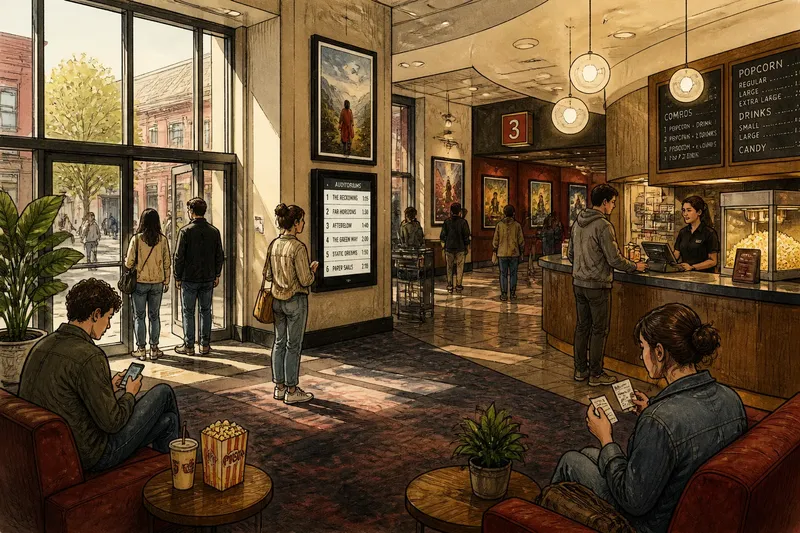
The cinema lobby changes the pace of a visit by giving you a place to stop before you sit down. A cinema lobby is more than a route from the street to the screen: its doors, light, ticket points, and waiting areas create a gradual transition from errands and conversation to watching a film.
Why does the cinema lobby feel like a threshold?
Crossing into a lobby puts everyday activity on pause without demanding that you become quiet all at once. You may still be checking a message, deciding what to eat, or looking for your friends, but the street is no longer directly around you. The lobby makes room for those last bits of practical business before the film takes your attention.
That pause can be subtle. A vestibule may soften outside noise; a darker carpet can signal that you have left the bright sidewalk; a staffed counter gives you a clear place to ask a question. None of these details has to feel solemn. Together, they help separate arrival from the act of watching.
The threshold matters because a movie asks for sustained attention. If you walk from a busy street straight into a dark auditorium while still arranging plans, your mind may take longer to settle. A lobby gives the visit a middle phase rather than forcing it to jump from ordinary surroundings to full concentration.
How does the lobby slow down an otherwise rushed visit?
A lobby slows the visit by offering small tasks in a contained space. You can put away your ticket, find the auditorium number, use the restroom, or choose a seat in the waiting area before the lights go down. These actions make the transition feel manageable instead of abrupt.
Its layout also shapes the pace. A clear route from entrance to ticket scanner, concessions, and auditorium reduces the feeling of being hurried by uncertainty. By contrast, a crowded queue or an unclear sign can keep your attention on logistics. The physical environment does not control your mood, but it can either ease or add friction to the change of scene.
Consider a hypothetical visit: you arrive at a neighborhood theater after a noisy bus ride, with your phone still open to a work message. You step into the lobby, silence the phone, check the screen for your auditorium, and wait beside a friend rather than walking straight to the door. The expected observable result is a calmer arrival: the practical decisions are handled before the film starts, leaving fewer immediate distractions to carry into the room.
What should you do in the lobby before the film?
Use the lobby to finish the decisions that would otherwise compete with the opening scenes. You do not need a ritual or a long pause; even a brief check of your ticket and belongings can make the move into the auditorium feel more deliberate.
- Confirm the auditorium and showtime on your ticket or the theater display.
- Decide whether you need a snack or drink before joining a line.
- Put your phone on silent and take care of any message that cannot wait.
- Choose a meeting point if your group is arriving separately.
- Use the restroom or refill a water bottle where the theater permits it.
- Notice whether you need a moment to sit, breathe, or simply stop walking.
These are options, not a checklist to complete every time. If you have already handled the practical details, you can let the lobby be a place to wait without filling the time. That small freedom is part of its value: a pause does not have to become another task.
How do light, sound, and layout change the transition?
Light tells your eyes that the setting has changed. Many lobbies are brighter than auditoriums, which helps people find tickets, counters, and one another. The contrast then becomes perceptible as you approach the screening room. A theater that keeps its lobby dimmer may make the change less pronounced, but the doorway still marks a shift in purpose.
Sound works in a similar way. Conversation, footsteps, and concession equipment give the lobby a social texture; the auditorium narrows those sounds toward the screen. The difference can make the first quiet moment feel more noticeable. In a busy lobby, that moment may arrive only after you find your seat, so there is no need to expect perfect silence beforehand.
Layout affects whether the lobby feels like a stopping place or just a corridor. Benches, ledges, and open corners let people wait without blocking others. Signs that are easy to spot keep attention from being consumed by wayfinding. In a compact theater, the lobby may be little more than a passage, but even a short pause at the auditorium entrance can serve as a transition.
Why does arriving early change the moviegoing experience?
Arriving with a little breathing room gives the lobby time to do its quiet work. You can orient yourself, meet your companions, and take care of practical needs without carrying the pressure of a closing door. The amount of time depends on the theater and your plans; the useful point is to avoid making every decision in the rush toward your seat.
Early arrival can also change how a group enters the film. Friends who gather in the lobby can finish their conversation there, rather than continuing it while the screen is beginning to hold the room. For a solo visitor, the same interval can be a chance to put away a phone and notice the theater’s atmosphere before choosing a seat.
Does the lobby matter if you already know the theater?
Yes. Familiarity makes the practical parts easier, but it does not make the transition meaningless. Knowing where the auditorium is lets you move through the lobby with less effort; that can leave more attention for the people you came with or for the change in sound and light as you enter.
Repeated visits can also give the space a personal rhythm. You may always pause near the same poster case, wait for a friend by the same column, or take the quieter route past the concession line. These small habits are not the film itself, but they become part of how you remember going to the movies.
What questions do moviegoers ask about the cinema lobby?
How early should I arrive at the cinema?
Arrive with enough time to find your auditorium and handle any needs before the screening begins. The right buffer depends on the theater, your ticketing situation, and whether you are meeting other people.
Can I wait in the lobby after buying a ticket?
Usually, the lobby is a natural place to wait, though seating and access vary by theater. Keep entrances, queues, and walkways clear so other moviegoers can move through easily.
Why do some cinemas have a separate entrance area?
A vestibule can help distinguish the street from the interior and create a calmer point of arrival. It can also reduce the amount of outside light and noise reaching the lobby.
Is the lobby part of the moviegoing experience?
Yes, because the visit begins before the opening image appears. The lobby gives you a place to arrive, orient yourself, and shift attention toward the film, even when the space is simple.
How can you make the transition feel less rushed?
Choose one small action that signals the change from outside life to moviegoing. It might be silencing your phone at the ticket scanner, finishing a conversation before you enter the auditorium, or taking a moment to look for the screen number rather than following the crowd. Keep it practical and suited to the theater you are in.
The cinema lobby changes the pace of a visit not through grand design but through the ordinary interval it provides. A good transition can be as modest as knowing where you are headed and having a moment to stop before the doors open. That pause leaves the film room to become the next place you are in, rather than just another stop on the way somewhere else.