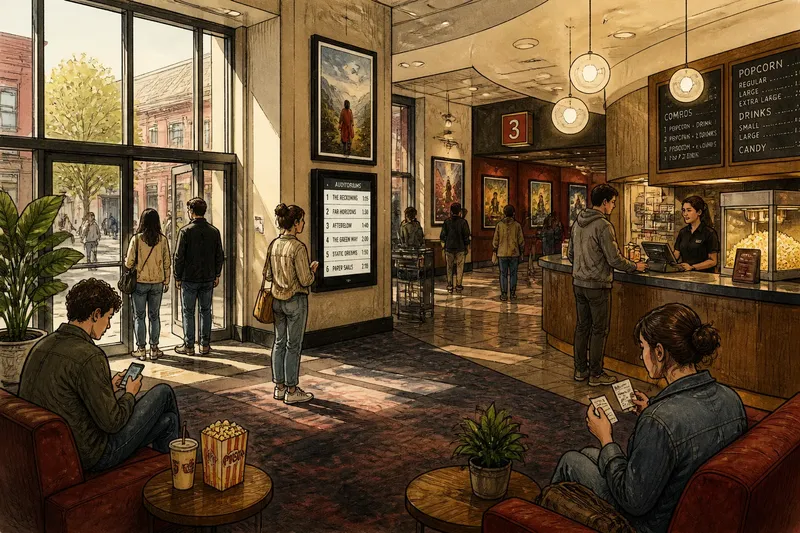
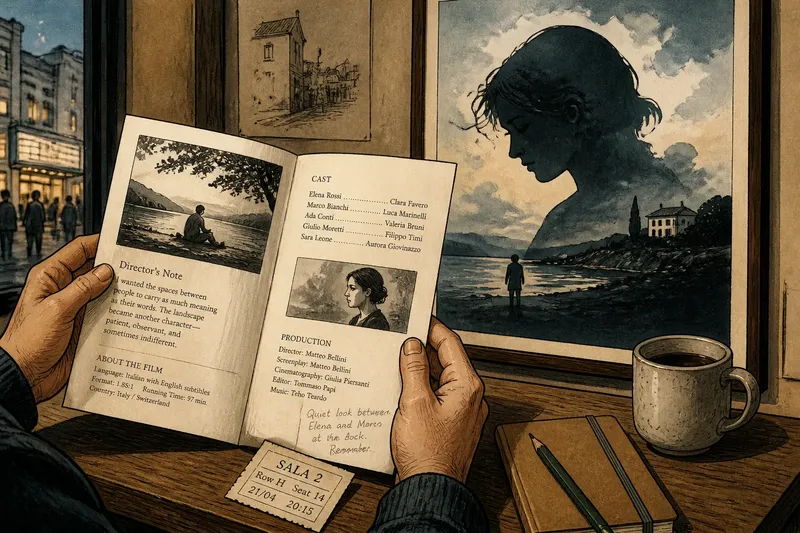
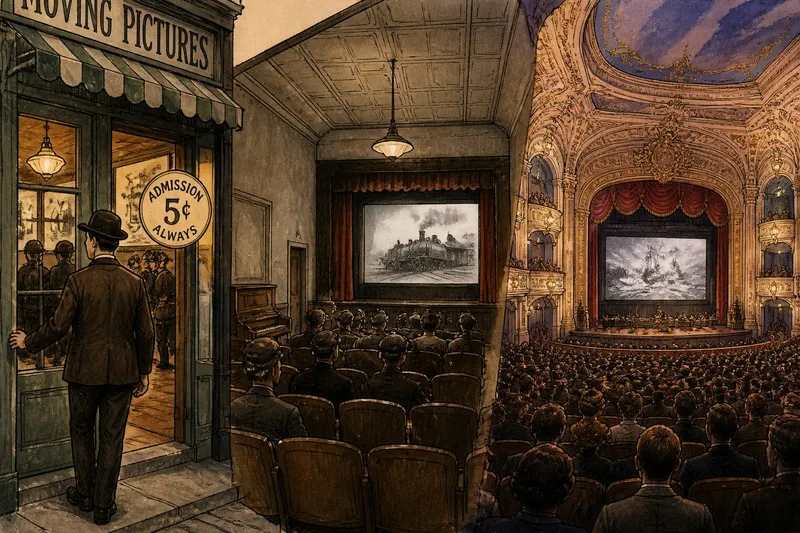
A Home Screening Built Around One Lasting Scene
A home screening built around one lasting scene gives friends an easy way to share what they noticed, without turning movie night into a quiz.
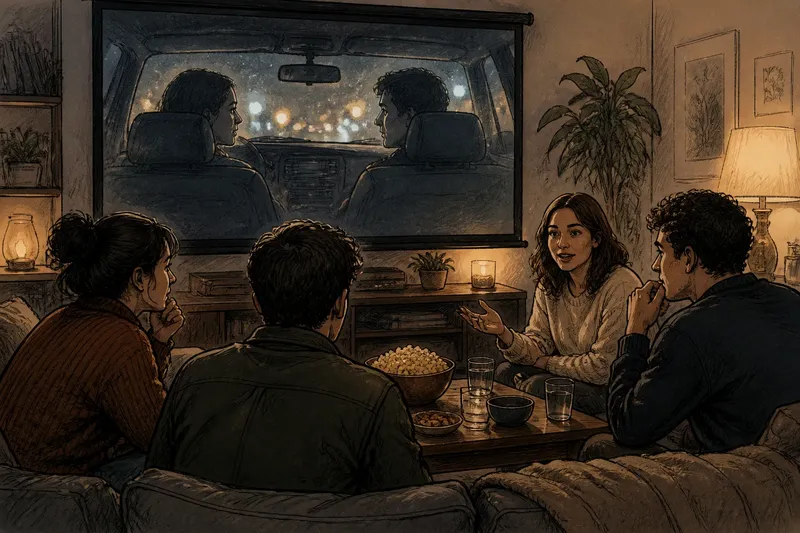
A home screening built around one lasting scene gives friends a shared place to begin talking after the credits. Choose a moment that stays with you, let the movie play without interruption, and use what people remember—not a plot recap—as the opening for conversation.
This works especially well when guests know the film differently. One person may remember the score, another an actor’s expression, while a first-time viewer notices something neither expected. The scene gives everyone a common point of attention without asking anyone to arrive with an interpretation ready.
What makes a scene a useful prompt?
A lasting scene is not necessarily the film’s biggest or most famous moment. It might be a quiet exchange at a kitchen table, a character waiting in a hallway, or a cut that changes how an earlier conversation feels. Choose a moment you can imagine returning to after the credits.
Look for room for different responses. A scene with an expressive pause, a shift in sound, or a detail near the edge of the frame can offer several ways in. You are not looking for a riddle with one correct answer.
Keep the invitation light. You might say that you have a scene in mind and would enjoy hearing what people notice after the movie. Guests can keep it in mind or simply let the film surprise them.
How can you plan the evening without making it homework?
Imagine that Mara invites three friends to watch a film she has seen before. She remembers a late scene in which two siblings sit in a parked car, unable to say what they came to say. One friend listens closely to sound; another follows the actors’ expressions; the third has never seen the movie. Mara chooses the scene because each person could respond to it in a different way.
Before the evening, Mara checks that she can play the film through a streaming service or disc. She tests the remote and sets out water and simple snacks. She does not prepare slides, print discussion questions, or mark the scene’s timestamp; her plan is simply to leave a little space after the credits.
When guests arrive, Mara says, “There’s a scene near the end I keep thinking about. Let’s see what sticks with you.” Then she starts the film. Nobody has to take notes or watch for clues, and the group watches through to the end without rewinding the chosen moment.
Afterward, Mara asks, “Was there a moment you found yourself carrying out of the film?” One guest recalls the silence before a sibling looks away. Another remembers a faint sound outside the car. The first-time viewer says the scene felt less like a resolution than a decision to keep trying. Mara had remembered the actors’ faces, but not the sound beyond the windows. Their different recollections give the group something concrete to discuss without turning the scene into a test.
How do you keep the conversation open?
Start with what people saw or heard: a gesture, a repeated object, a change in lighting, a pause, or a sound that seemed to come from beyond the frame. A specific detail gives a quieter guest an easy way to join without offering a grand opinion.
Then make room for personal associations. Someone may connect the scene to a familiar place; another may focus on how the camera holds its distance. Neither response has to settle the film’s meaning. Share your own reading after others have had room to speak.
Try one question at a time and follow what the group actually notices:
- What detail stayed with you after the scene ended?
- Did the scene feel different once you knew how the film finished?
- Was there a sound, gesture, or pause you noticed only afterward?
- Did anyone remember the moment differently from how it appeared on screen?
These are invitations, not questions to complete in order. If the conversation moves to another scene, let it. The chosen moment is a doorway, not a boundary around what guests are allowed to remember.
What if the scene does not land for everyone?
That does not mean the screening failed. One guest may find the scene powerful, while another remembers a comic exchange or an image from elsewhere in the film. A group brings different moods, memories, and levels of familiarity; one prompt cannot make everyone respond alike.
If nobody mentions your chosen scene, you can say, “I thought I’d remember the car scene, but I’m curious what stayed with you.” That makes your interest clear while leaving the group free to move on. If the room goes quiet, offer a small observation of your own, then let the conversation develop—or let the evening end without forcing one.
There is no need to replay the scene immediately. Rewinding can turn a shared memory into a close-reading exercise and make guests feel they missed something. If someone asks to see it again, decide together; otherwise, let different recollections coexist.
What should you consider before choosing the film?
Pick a movie that suits the people and the room, not just one that contains a favorite scene. Consider whether guests are comfortable with the subject matter, whether subtitles will be easy to follow on your screen, and whether everyone can settle in without constant explanations. If some guests have not seen it, avoid giving away the scene’s context in the invitation.
A comedy or an observational documentary can work as well as a film with an obvious emotional center. The scene should invite attention without demanding specialist knowledge. You do not need to introduce a director’s biography or explain production choices unless someone asks and you have reliable information to share.
For Mara’s imagined evening, the siblings’ conversation is easy to enter: the car, the silence, and their uneasy attempt to speak are all visible or audible. A guest can begin with any of those details, even without prior knowledge of the movie. That is a useful way to choose your own scene: can you imagine a friend responding in their own words?
How do you choose and share a scene without spoilers?
Does the scene need to be the film’s most famous moment?
No. A less publicized moment can give guests room to respond without feeling they should repeat a familiar opinion. Choose for its ability to stay with you, not its reputation.
Should guests know which scene you have chosen?
You can mention that you have one scene in mind without identifying it. Letting the film arrive naturally protects the first-time viewer’s experience and keeps the prompt from feeling like an assignment.
What if someone has already seen the movie?
That is fine; familiar viewers may notice how their memory differs from what appears on screen. Ask them to avoid revealing major turns, then let them contribute without treating their familiarity as authority.
Is it better to talk right after the credits?
Give people a moment to stretch, get water, or sit with the ending. A short pause can make conversation feel like a natural continuation of movie night rather than a scheduled discussion.
What can you carry into the next screening?
A lasting scene does not need to produce consensus or a polished interpretation. It can give a group a shared reference point: a sound one person noticed, a gesture another remembers, or a moment that changed shape after the ending. Those details can be more revealing than a round of verdicts about whether the film was good.
For a home screening built around one lasting scene, keep the plan modest: choose a moment with room for different responses, watch without turning it into homework, and offer a question that lets guests begin anywhere. Someone may carry a small detail into the kitchen while pouring tea, newly visible because another viewer gave it a name.